Table of contents
Forestry operations constantly demand tools that maximize productivity and adaptability in demanding environments. Telescopic poles have emerged as an essential component, revolutionizing how forestry professionals approach tasks from pruning to sample collection. Explore how these innovative implements can streamline workflows, enhance safety, and deliver superior results in every stage of forestry work.
Increased Reach And Accessibility
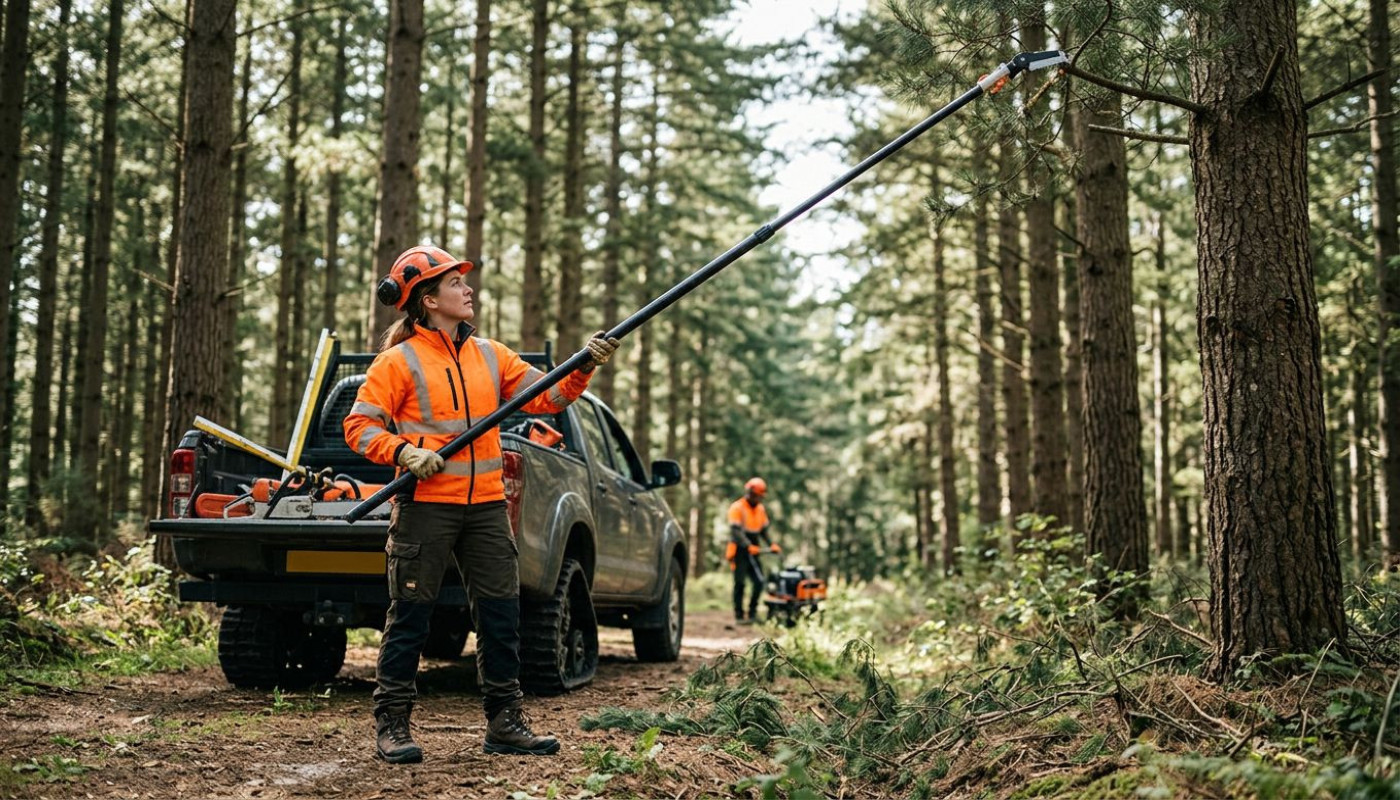
Telescopic poles significantly enhance forestry equipment by delivering extended reach and improved accessibility, especially when handling tree maintenance tasks in challenging environments. These specialized tools enable forestry workers to access high or difficult-to-reach branches without the risks and labor associated with traditional methods like climbing or employing bulky machinery. By using a telescopic pole, workers can perform canopy thinning and other maintenance from the ground, minimizing the physical strain involved and maintaining safe access at all times. The concept of working height—meaning the maximum vertical distance a worker can operate effectively—becomes pivotal in forestry settings, as it allows efficient pruning or cutting operations with minimal repositioning. This direct access streamlines workflow, reduces manual labor requirements, and accelerates routine processes, shaping a more productive and safer forestry operation overall.
Enhanced Safety Measures
Utilizing telescopic poles in forestry significantly advances safety in forestry by allowing ground-based operations, reducing the necessity for workers to climb trees or work at perilous heights. This approach directly addresses fall prevention, as traditional methods often require the use of ladders or harnesses, where reliance on a fall-arrest system is mandatory. In comparison, telescopic pole pruners enable tasks such as branch trimming or canopy management from the ground, diminishing exposure to occupational hazards like falls or injuries caused by slips. Experts in forestry management regularly emphasize the adoption of ergonomic tools such as telescopic poles, which not only reduce physical strain but also align with regulatory safety standards set by agencies like OSHA. Incorporating these devices helps organizations meet compliance requirements while fostering a safer work environment, setting a benchmark for best safety practices in the industry.
Versatility In Forestry Tasks
Telescopic poles serve as a highly adaptable equipment solution within forestry operations, owing to their modular design and advanced attachment system. This multipurpose tool can be swiftly outfitted with a range of accessories, including saws for branch removal, pruners for targeted canopy management, and sampling tools for ecological assessments, making it highly valuable across various forestry tasks. Such versatility not only streamlines the transition between activities but also significantly minimizes equipment downtime, as workers are able to switch tools on a single telescopic pole without returning to a central tool depot or carrying multiple specialized instruments into the field. Those with the highest level of oversight in forestry operations are encouraged to highlight how this adaptability supports operational efficiency, promotes workforce safety, and ensures readiness for unplanned challenges in dynamic woodland environments. The modular design further promotes ease of maintenance and future-proofing, as new attachments can be integrated to accommodate evolving forestry needs.
Improved productivity and workflow
Telescopic poles significantly boost forestry productivity by enabling teams to access hard-to-reach areas with minimal repositioning, streamlining daily operations and reducing the need for manual labor. This advanced design allows workers to cover broader sections of forest in much less time, which translates directly into a more efficient workflow and noticeable labor reduction. The use of telescopic poles maximizes equipment efficiency, as fewer resources are needed to achieve the same or better results, and specialized tasks can be performed without disrupting ongoing activities. In forestry management, enhanced operational throughput—the rate at which work is completed—means project timelines are shortened and resource allocation becomes more effective, supporting sustainable forestry practices.
Those overseeing forestry projects, such as site managers or operational supervisors, are encouraged to evaluate how these innovations impact both short- and long-term outcomes. The choice of tools directly influences operational throughput, and adopting telescopic solutions can transform how work is planned and executed. For further insights into equipment efficiency and its practical applications in forestry, read the article, which offers expanded guidance on selecting the best solutions for maximizing productivity and ensuring a streamlined, time saving approach to forest management.
Reduced Environmental Impact
Telescopic poles significantly support sustainable forestry by enabling low-impact equipment operations, which help preserve soil structure and protect surrounding vegetation. Unlike heavy machinery that can cause substantial soil compaction, root damage, and habitat disruption, these poles allow workers to perform tasks such as pruning, canopy intervention, and sampling with minimal disturbance to the forest floor. This approach not only aids in soil protection but also promotes environmental stewardship, as reduced ground disturbance leads to better water infiltration and the maintenance of biodiversity. Senior forestry managers should emphasize the ecological advantages of adopting telescopic poles, encouraging teams to prioritize techniques that maintain the health of ecosystems. By integrating best practices for minimal disturbance and focusing on targeted canopy intervention, professionals can ensure that forest management activities align with long-term sustainability goals while reducing their environmental footprint.
Similar